The Hidden Damage Caused by Japanese Beetles
Japanese beetles are one of the most destructive garden and lawn pests in North America (Photo 1). While the shiny, copper-colored adult beetles are easy to spot feeding on leaves and flowers, the real damage often happens underground where you can’t see it. Japanese beetle larvae, commonly called grubs (Photo 2), live in the soil and feed on grass roots. As they consume the root system, lawns lose their ability to absorb water and nutrients. The result is brown, thinning turf that can be rolled back like a carpet. Birds, skunks, and raccoons may also dig up lawns (Photo 3) searching for grubs, causing even more damage.
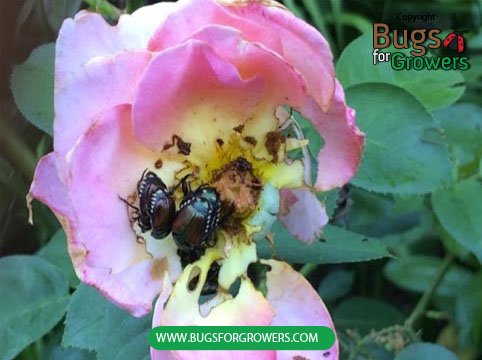
Photo 1. Japanese beetles are feeding on a rose flowe
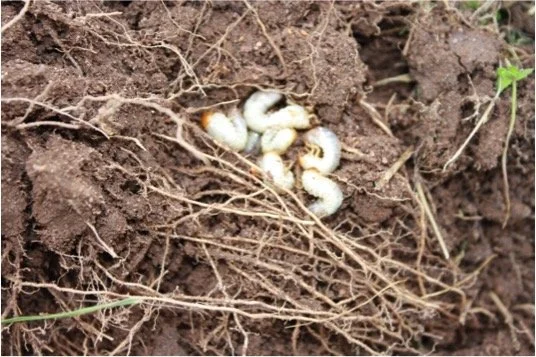
Photo 2. Japanese beetle grubs.
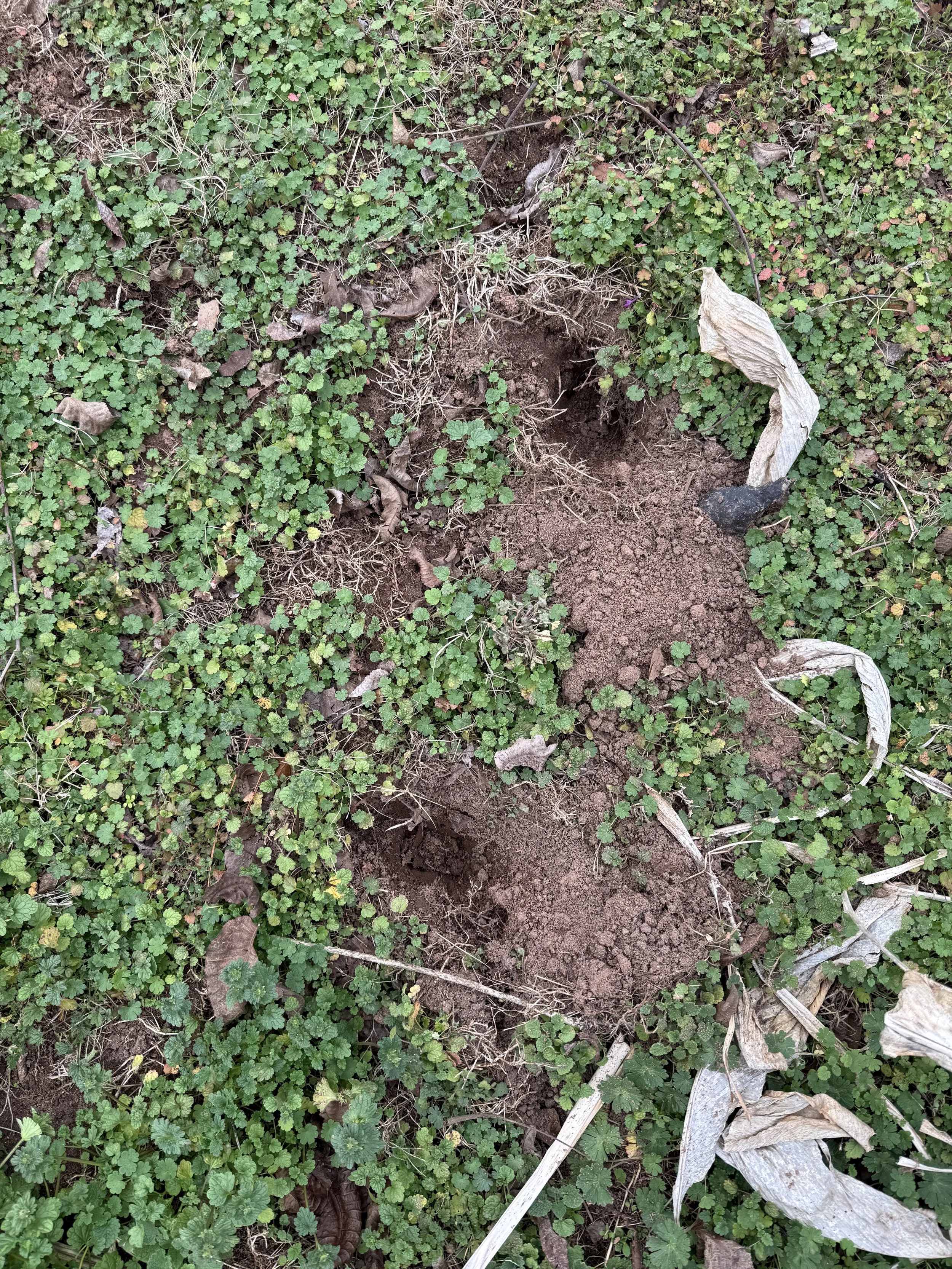
Photo 3. Lawn dug up by skunks or raccoons in search of Japanese beetle grubs
Plants Most at Risk
Adult Japanese beetles are not picky eaters. They commonly attack:
Roses (Photo1)
Fruit trees (apple, cherry, peach, Photo 4)
Grapes
Linden and birch trees
Beans, corn, and ornamental shrubs
Japanese beetle feeding leaves behind a distinctive skeletonized appearance, where only the leaf veins remain.
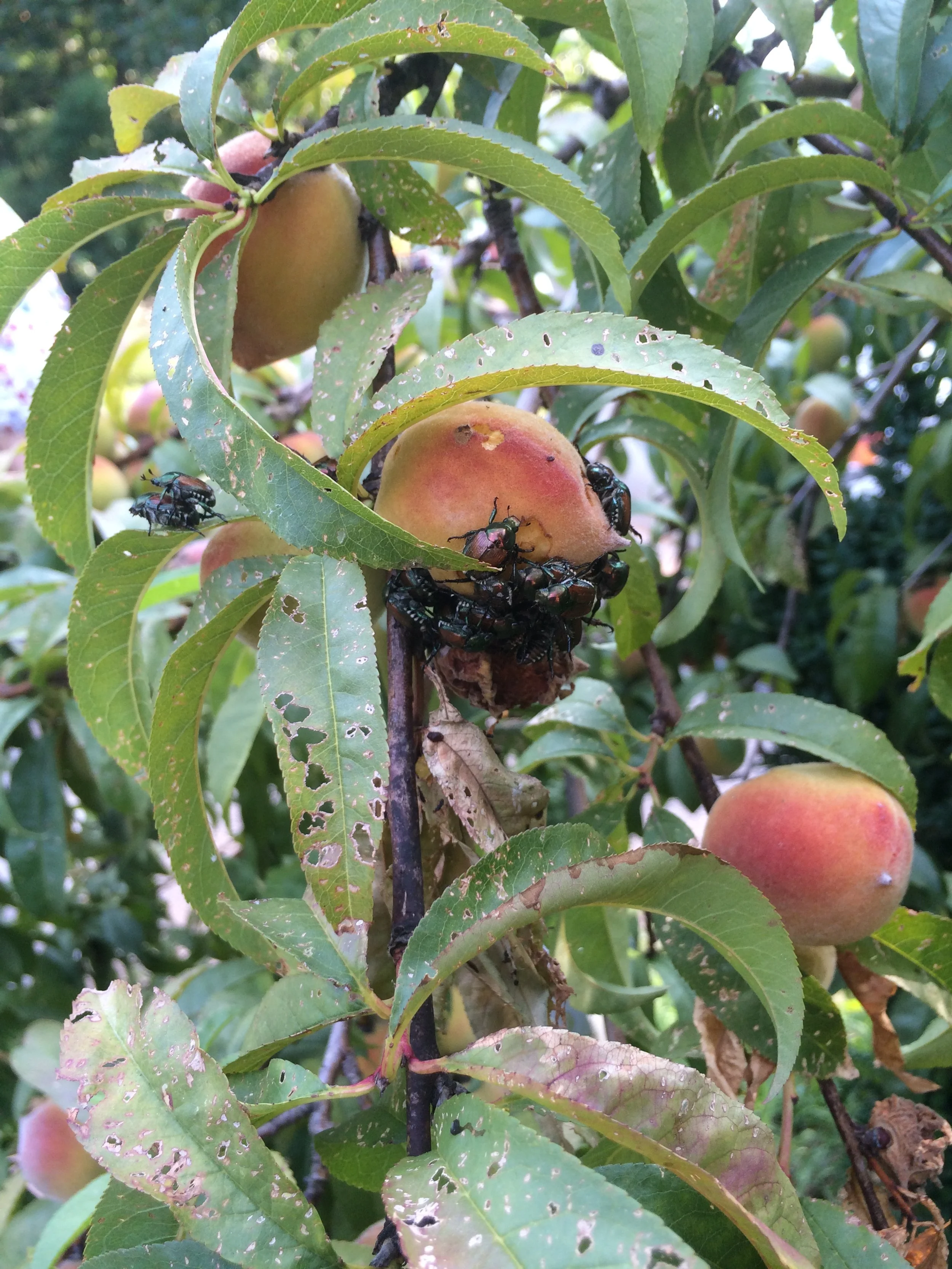
Photo 4. Japanese beetle adults feeding nectarine fruits
Why Traditional Controls Fall Short
Many chemical pesticides only target adult beetles and provide short-term relief. These treatments often:
Miss the grub stage entirely
Harm beneficial insects like pollinators
Require repeated applications
To truly reduce Japanese beetle populations, control must start in the soil, where the grubs develop.
Beneficial Nematodes: A Natural Solution For Japanese Beetles
Beneficial nematodes especially, Heterorhabditis bacteriophora (Photo 5) are microscopic, soil-dwelling organisms that seek out and eliminate Japanese beetle grubs. Once applied to the lawn, they enter the grubs and release entomopathogenic bacteria called Photorhabdus luminescens that kill grubs within 48 hours and stop the pest from feeding and reproducing.
Benefits of beneficial nematodes
100% natural and non-toxic
Safe for people, pets, pollinators, and wildlife
Targeted control without harming earthworms
Long-lasting population reduction
Because nematodes work underground, they help prevent future generations of adult beetles from ever emerging.
When, How Many and How to Apply Nematodes
For best results, apply 25,000 beneficial nematodes per square foot grub infested ares:
In late spring or early fall when grubs are active
When soil temperatures consistently above 50°F (10°C)
To moist soil, ideally in the early morning or evening to protect them from UV light
With gentle watering before and after application, consistent soil moisture helps nematodes move through the ground and find their targets.
Conclusion
Using beneficial nematodes as part of an integrated pest management plan can dramatically reduce Japanese beetle damage over time. Healthier soil, stronger turf, and fewer adult beetles mean a lawn and garden that can thrive naturally without relying on harsh chemicals.
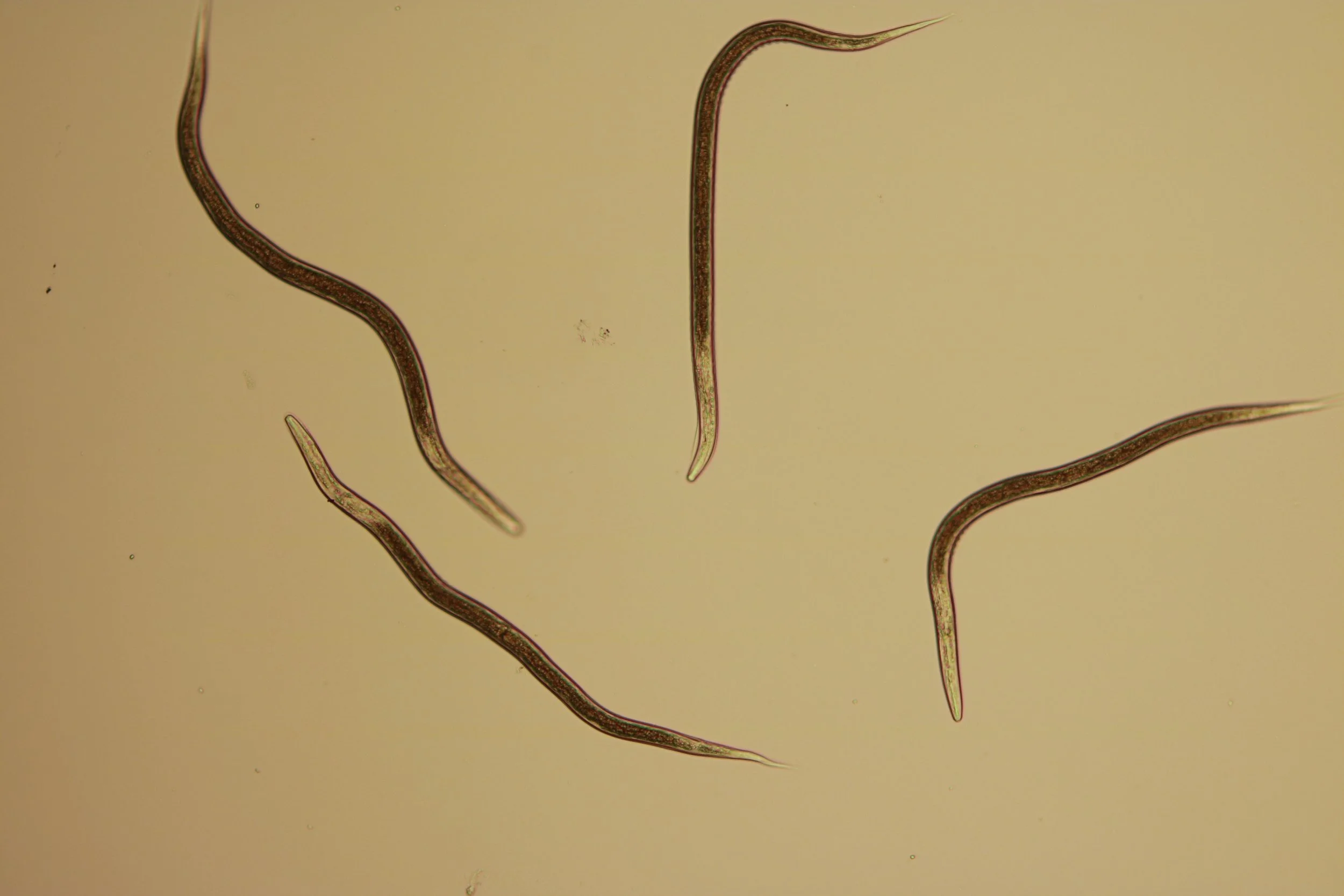
Photo 5. Beneficial Heterorhabditis bacteriophora nematodes