Watch YouTube short “Stop Overwintering of Japanese beetles”.
Introduction
Japanese beetles (Popillia japonica) can cause serious damage to healthy landscapes by skeletonizing leaves (Photo 1), damaging flowers (Photo 2), and fruits (Photo 3). While the grub stage feeds on roots and develops in the soil, declining turf and other plants. One of the most useful biological tools for targeting the next generation is the beneficial entomopathogenic nematode Heterorhabditis bacteriophora. These microscopic, soil-dwelling nematodes actively infect beetle grubs and kill them, helping reduce the population before the next generation of adults emerges.
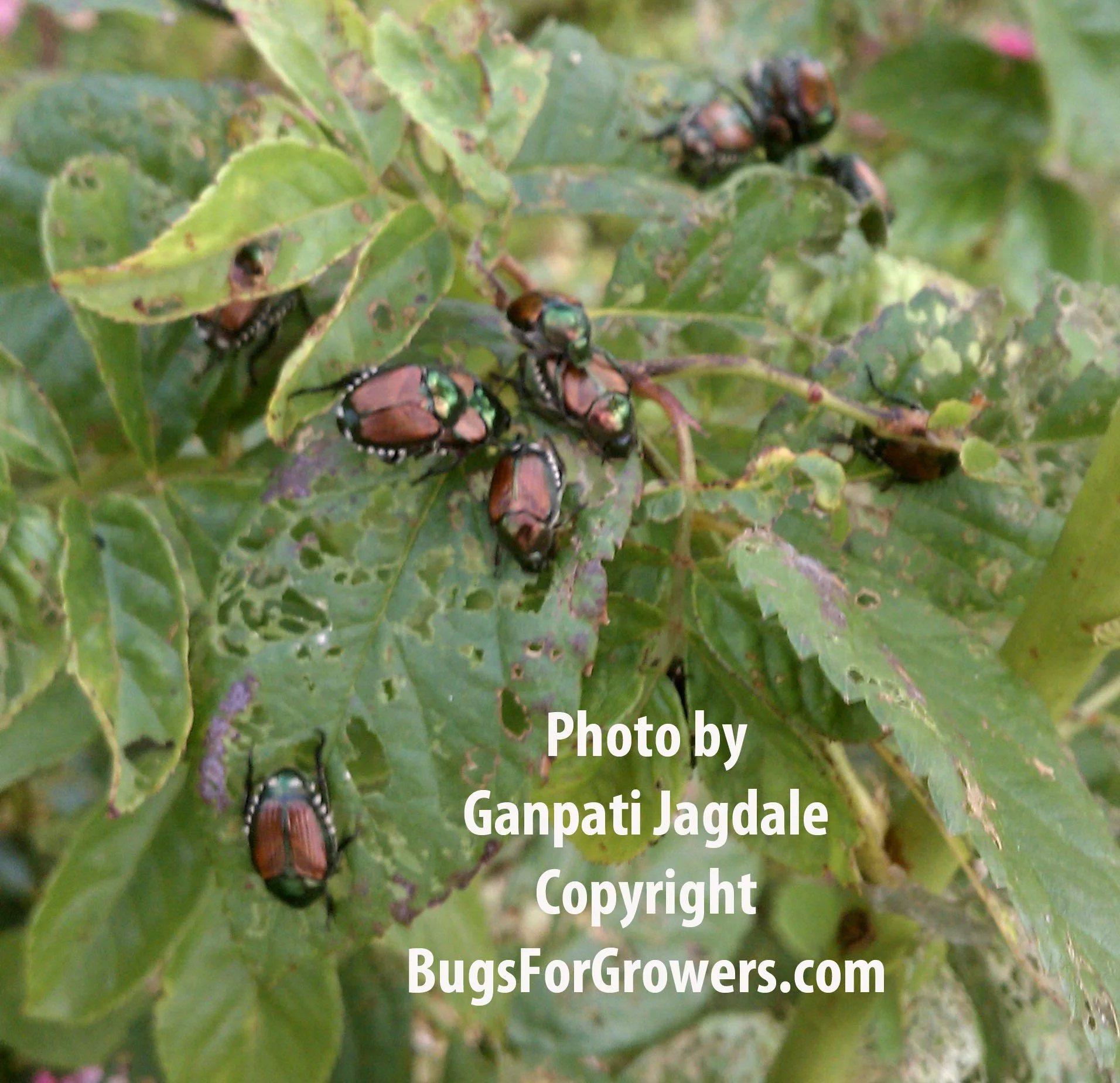
Photo 1. Japanese beetle adults feeding on leaves.
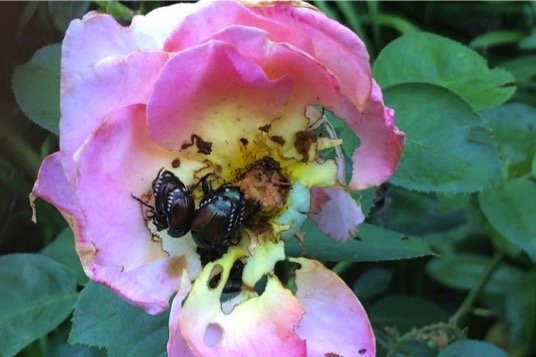
Photo 2. Japanese beetles feeding on a rose flower.
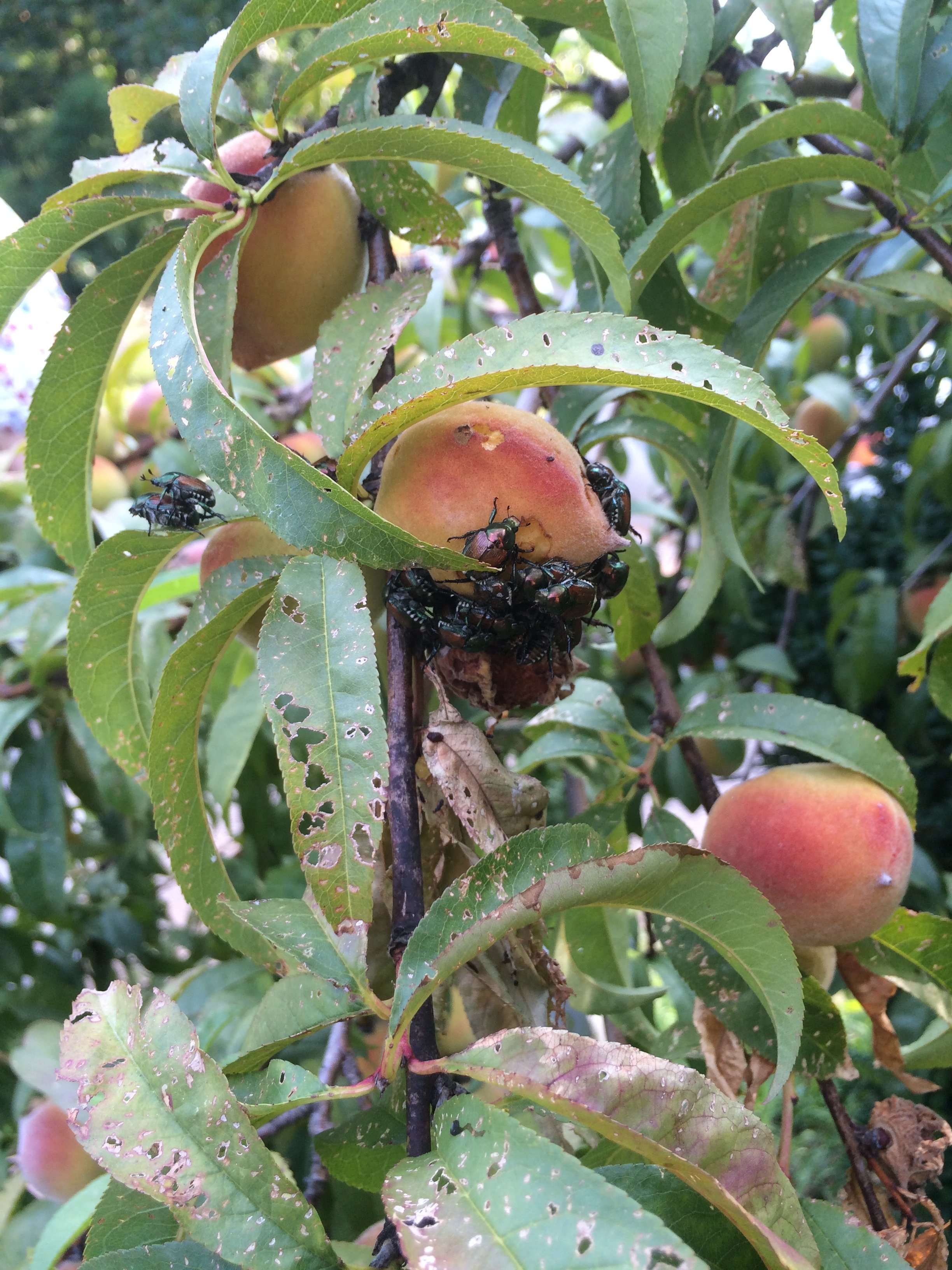
Photo 3. Japanese beetle adults feeding on fruits
Japanese Beetle Life Cycle
Japanese beetles complete one generation per year. Adults emerge during the summer, feed on foliage and flowers, mate, and lay eggs in the soil. The resulting grubs feed on plant roots before moving deeper into the soil as temperatures fall, where they survive the harsh winter conditions. In the following spring, the grubs move back into the root zone of turfgrass and resume feeding on roots. They mature and pupate in the soil before emerging as adults in the summer, completing the life cycle.
Damage Caused by Japanese Beetle Adults
Japanese beetles caused damage to many ornamental plant species, including roses, crape myrtles, grapes, lindens, crabapples, birches, maples, zinnias, and many field crops. Adult Popillia japonica are best known for their characteristic skeletonizing damage. They chew the soft tissue between leaf veins, leaving behind a lace-like network of veins. Heavy infestations can cause extensive defoliation. Adults also feed on flowers, flower buds, and fruits and can be particularly noticeable when large numbers congregate on preferred host plants.
Damage caused by Japanese Beetle Grubs
Japanese beetle grubs feed primarily on grass and other plant roots (Photo 4). As root systems are damaged, turf may develop irregular yellow or brown patches and become more susceptible to drought and heat stress. Severely damaged turf can become loose enough to pull away from the soil. Grub feeding can also attract birds, skunks, raccoons, and other animals that dig into the lawn while searching for larvae/grubs, causing additional turf damage.
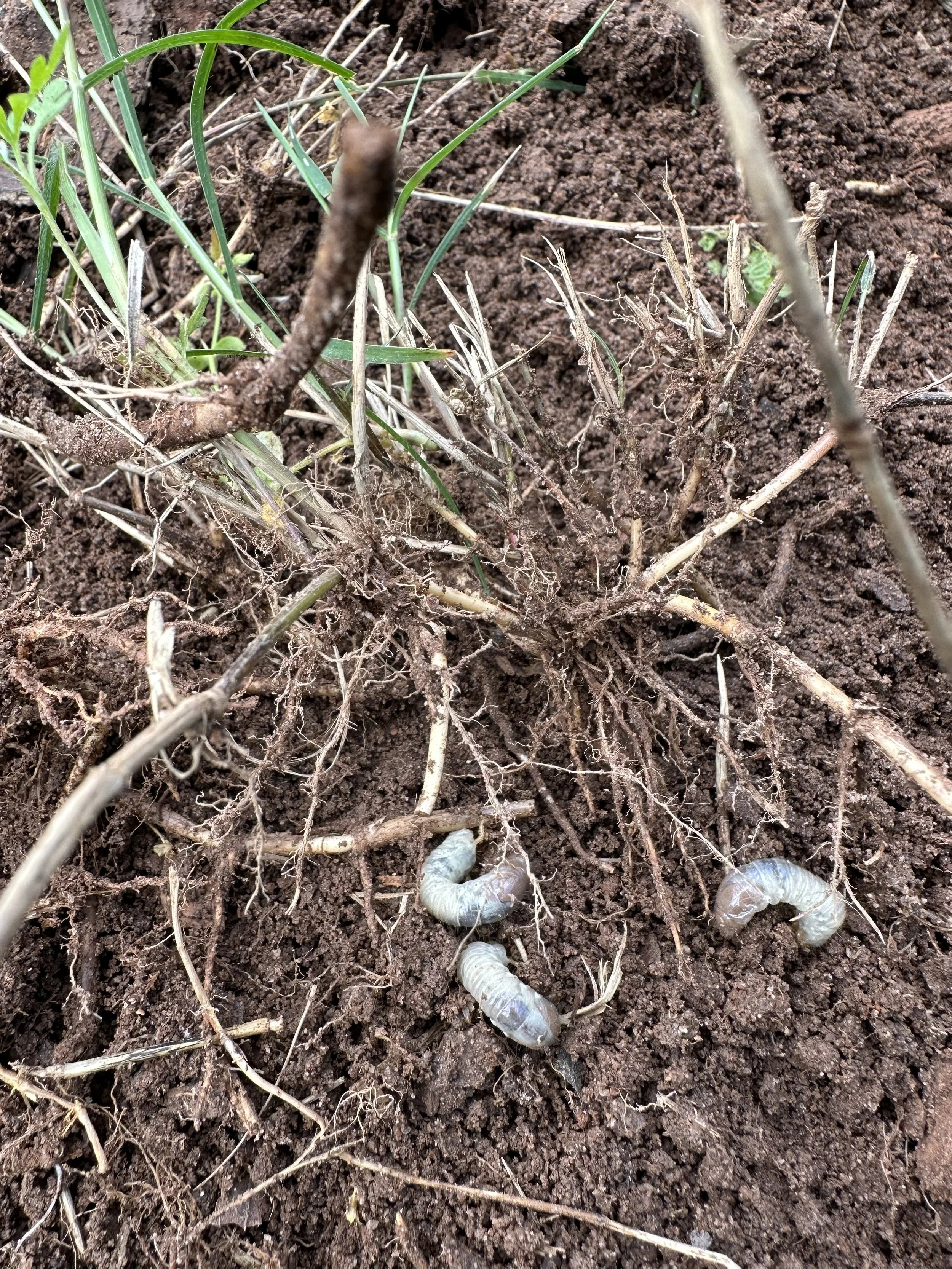
Photo 4. Japanese beetle grubs
Why Target Japanese Beetles Before Winter?
In the lifecycle of Japanese beetles, the soil-dwelling grub stage is a key target for beneficial nematodes. Rather than attempting to eliminate highly mobile adult beetles after they have already arrived on plants, biological control agents, including Heterorhabditis bacteriophora nematodes can be directed at the immature grub stage in the soil. Therefore, the goal of a late-season application of beneficial nematodes is not to kill adult beetles that have already fed on your plants. Instead, the objective is to reduce the grub population in the soil before it survives the winter, causes further damage to roots, or emerges as the next generation of adults the following season. As Japanese beetle grubs develop while feeding on roots, they eventually move deeper into the soil to avoid extreme cold temperatures during winter. Once they have stopped feeding and moved downward in late fall, conventional treatments can become less effective. This makes proper timing important when using beneficial nematodes, which can seek out grubs in the soil profile, infect them, and kill them in fall before they move deeper into the soil. For many regions, Heterorhabditis bacteriophora nematodes are best applied when young Japanese beetle grubs are present and actively feeding in the root zone, rather than waiting until the larvae have moved deeper into cold soil.
How Heterorhabditis bacteriophora nematode controls Japanese beetle grubs
Beneficial Heterorhabditis bacteriophora is an entomopathogenic nematode (Photo 5), a microscopic roundworm that attacks insect larvae including Japanese beetle grubs in the soil. The infective juvenile nematodes search through moist soil for beetle grubs. After locating a grub, they enter through natural openings such as mouth, anus and breathing pores or Heterorhabditis bacteriophora nematodes can also enter into the insect through cuticle. The nematodes release symbiotic bacteria (Photorhabdus luminescens) in the grub blood where they multiply, cause septicemia and kill grubs within 48 hours. The nematodes then use the host cadaver as a food and reproductive resource. This makes Heterorhabditis bacteriophora particularly useful against soil-dwelling scarab grubs, including Japanese beetle grubs.
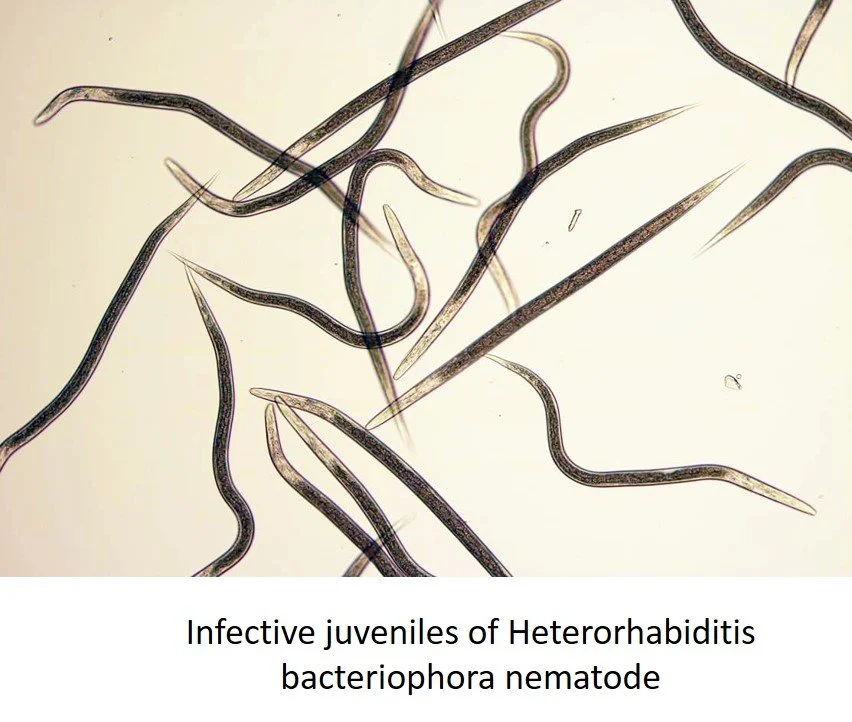
Photo 5. Beneficial nematodes.
Recommended Heterorhabditis bacteriophora rates for Japanese beetle grub control
For effective control of Japanese beetles, it has been recommended to apply about 25–50 million infective juveniles of Heterorhabditis bacteriophora in 2- 3 gallons of water per 1,000 square feet using a watering can (Photo 6) or approximately 1–2 billion nematodes in 65–130 gallons of water per acre using any traditional knapsack sprayer.
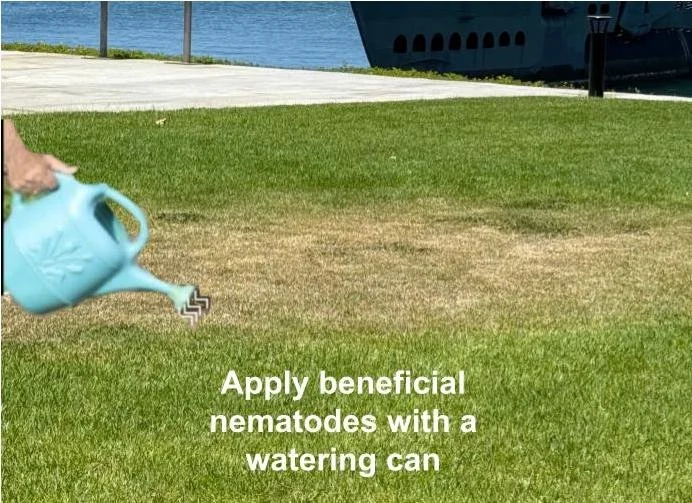
Photo 6. Application of beneficial nematodes.
When should you apply Heterorhabditis bacteriophora nematodes?
Apply Heterorhabditis bacteriophora nematodes when young Japanese beetle grubs are present in the soil and accessible to the nematodes. To stop overwintering of Japanese beetle grubs, it is recommended that nematodes apply twice starting between August and the end of October or before young grubs start moving deep in the soil when temperature starts cooling down. Also application of nematodes from mid-July through mid-August as a useful period for targeting smaller Japanese beetle grubs. Avoid waiting until the grubs have moved deep into the soil for winter.
How to apply beneficial nematodes
Successful nematode applications depend heavily on moisture and environmental conditions. Before treating, confirm that Japanese beetle grubs are actually present. Look beneath damaged turf or in the root zone. Also, look for small holes dug into the lawn by skunks, raccoons, and other animals while searching for larvae/grubs. Heterorhabditis bacteriophora nematodes are living organisms and are highly sensitive to drying. If the soil is dry, water the treatment area before and after applying the nematodes so that they move freely into the soil and remain in a moist environment. Maintaining adequate soil moisture is one of the most important factors affecting nematode survival and performance against grubs. While applying nematodes, avoid strong sunlight. Apply nematodes early in the morning or late in the evening to protect them from UV radiation as its slightest exposure can kill them instantly.
Heterorhabditis bacteriophora nematodes don't control adult beetles on foliage
One important distinction is that Heterorhabditis bacteriophora should primarily be considered a grub-control tool, not a foliar treatment for adult Japanese beetles. Adult beetles live and feed above ground on leaves, flowers, and fruits. When nematodes are applied to these surfaces, they are exposed to UV radiation, which can quickly kill them. Nematodes also require a film of water to move and locate host insects; without sufficient moisture, they desiccate and die quickly. Therefore, H. bacteriophora cannot effectively control adult Japanese beetles. To reduce future adult populations, nematodes should be applied to the soil, where they can target susceptible grubs in the root zone and reduce adult emergence the following summer.
Can beneficial nematodes prevent next year's Japanese beetle infestations?
No biological control can guarantee that Japanese beetles will not return. Adult Japanese beetles can fly into a landscape from surrounding areas, so reducing grubs on one property does not necessarily prevent reinvasion by adults. However, targeting the grub stage can reduce the number of Japanese beetles developing within the treated area. This makes H. bacteriophora a useful component of an integrated Japanese beetle management program—particularly where maintaining turf and ornamental plants with biological control is a priority.
Conclusion
Japanese beetle management starts with understanding that the pest has two distinct damaging stages. The adult Popillia japonica feeds above ground, skeletonizing leaves, damaging flowers, and feeding on fruit. The grub feeds below ground, damaging grass and plant roots and potentially contributing to significant turf decline. Beneficial Heterorhabditis bacteriophora nematodes provide a biological option for targeting these soil-dwelling grubs. For Japanese beetle grubs, commercial recommendations commonly range from 25–50 million infective juveniles per 1,000 square feet, or approximately 1–2 billion per acre. The key is timing: target young grubs while they are present in the root zone, apply nematodes under favorable moisture and light conditions, and irrigate properly after treatment. Heterorhabditis bacteriophora nematodes can help reduce the soil-dwelling stage of Japanese beetles before it contributes to the next generation of adult beetles.