Introduction
Fungus gnats are one of the most common and frustrating pests in greenhouses, houseplants, and indoor growing systems. While the adults are mostly a nuisance, their larvae can cause serious damage below the soil surface. Fortunately, beneficial nematodes specifically Steinernema feltiae offer an effective, chemical-free way to control fungus gnat populations.
What Are Fungus Gnats?
Fungus gnats are small, dark, mosquito-like flies commonly found around moist soil and organic growing media (Photo 1). They are attracted to overwatered plants, compost-rich soils, and warm indoor environments.

Photo 1. Fungus gnat adult.
Common name: Fungus gnat
Scientific Name: Bradysia species
The adult gnats lay eggs in damp soil, where larvae hatch and begin feeding almost immediately.
Damage Caused by Fungus Gnats
Adult fungus gnats are harmless to plants but they are nuisance to people. However, the real threat comes from fungus gnat larvae (Photo 2) living in the root zone. These larvae feed on:
Fine plant roots and root hairs
Germinating seeds and seedlings
Organic matter and fungi in the soil
This feeding can lead to:
Stunted plant growth
Yellowing or wilting foliage
Reduced nutrient uptake
Increased susceptibility to root diseases such as Pythium and Fusarium
In severe infestations, young plants and seedlings may fail entirely.
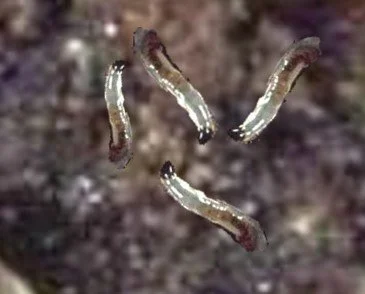
Photo 2. Fungus gnat larvae
What Is Steinernema feltiae?
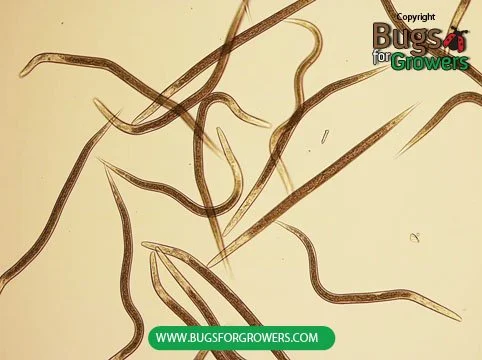
Steinernema feltiae (Photo 3) is a species of beneficial entomopathogenic nematode, a microscopic roundworm that parasitizes soil-dwelling insect pests. These nematodes naturally occur in soils worldwide and are harmless to plants, people, pets, and beneficial insects like bees.
How Steinernema feltiae Controls Fungus Gnats
Once applied to moist soil, Steinernema feltiae actively seeks out fungus gnat larvae. The nematodes enter the larvae through natural body openings such as mouth, anus and spiracle. Once inside the body cavity, they release symbiotic bacteria that quickly multiply, cause septicaemia and kill the host within 48 hours. The nematodes then reproduce inside the larvae, emerge as infective juveniles and continue searching for new target pests in the soil.
Key benefits include:
Targets larvae at the source of the problem
Works below the soil surface
Provides ongoing suppression with proper conditions
No chemical residues or resistance issues
Most fungus gnat larvae are killed within a few days of application.
Why Use Beneficial Nematodes?
Using Steinernema feltiae fits perfectly into an integrated pest management (IPM) approach. They are especially effective in:
Houseplants
Greenhouses
Indoor gardens and grow tents
Seedling trays and propagation areas
They perform best in consistently moist soil and moderate temperatures, making them ideal for indoor and protected growing environments.
Conclusion
Instead of relying on sticky traps and repeated chemical treatments, Steinernema feltiae addresses fungus gnat infestations where they start in the soil. By reducing larval populations, beneficial nematodes help protect roots, improve plant health, and restore balance to your growing system.